USDA, EU & JAS Organic Certification: Why It Matters for Organic Spices
Organic Spices Need More Than an “Organic” Claim
We all know that the world is rapidly moving towards organic. More than just a trend, it is a sign that people have started thinking more carefully about their health and well-being. The more you focus on healthy food choices, the more you support a healthy lifestyle.
People around the world are increasingly looking for organic food products on supermarket shelves. When it comes to spices, they are an essential part of everyday cooking as well as gourmet cuisine. Therefore, getting your spices right is an important part of making healthier food choices.
But when purchasing spices, can you be sure that everything labelled “Organic” on supermarket shelves is genuinely organic? Unfortunately, not necessarily. You should carefully consider where the product comes from and whether it is supplied by an organic certified supplier. Does the supplier have valid organic certification?
What Is Organic Certification?
Organic certification simply means that a recognized certification body has certified a supplier as eligible to produce, handle, process, or trade organic products after fulfilling a defined set of standards and requirements. Once the selected organic certification body determines that the business meets the applicable organic standards, an organic certificate is issued.
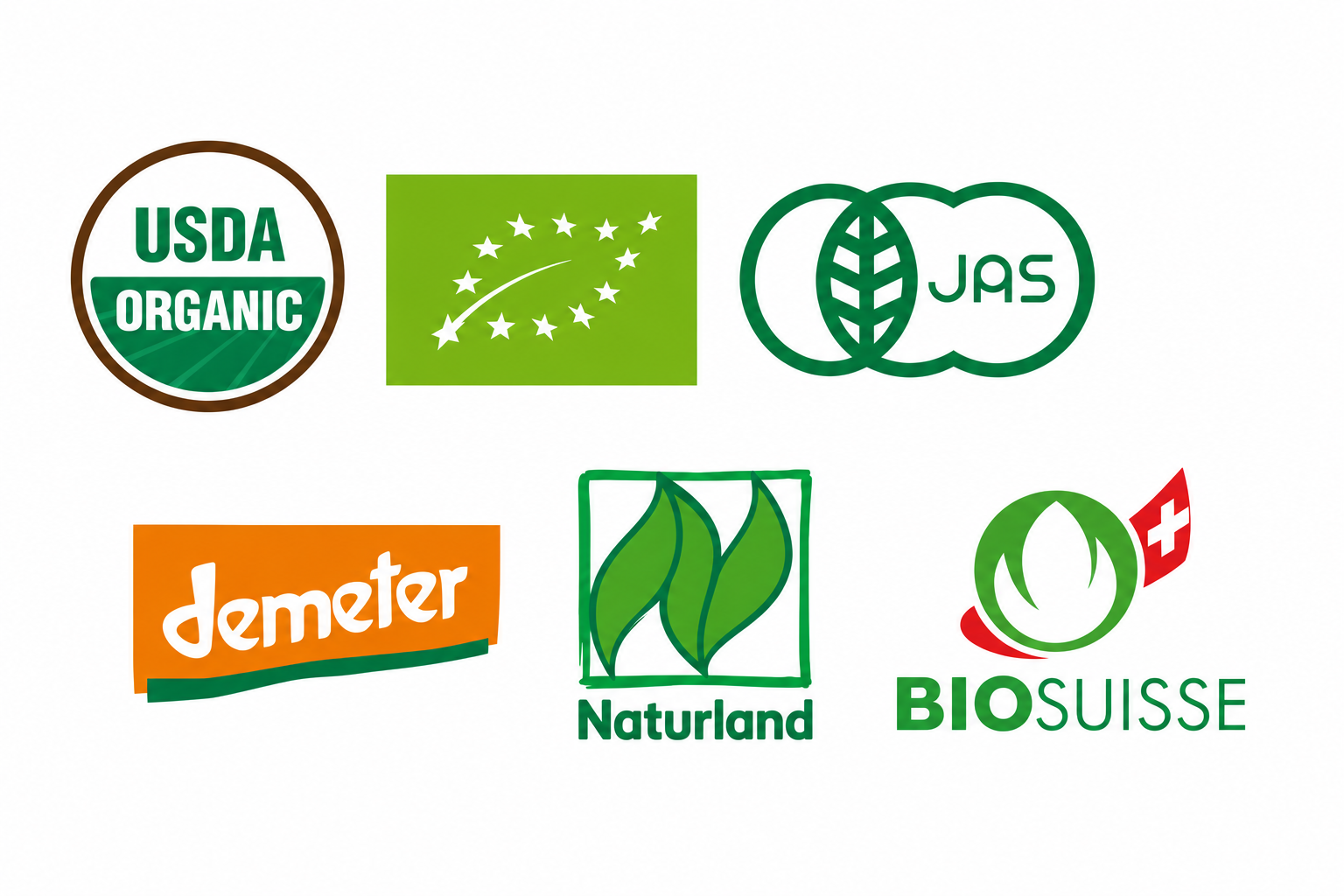
There are many organic certifications and standards around the world, including USDA-NOP, EU Organic, JAS, Mexican Organic, Sri Lankan Organic, Canada Organic, Australian Certified Organic, China Organic, Korea Organic, Demeter, Naturland, Bio Suisse, and many more. However, when it comes to international agricultural exports, three important organic certification systems are USDA-NOP, EU Organic, and JAS Organic.
When you have organic certification as a certified organic agricultural exporter, organic goods are subject to traceability throughout the supply chain. The products must come from an organic certified farm and should be processed at an organic certified facility without contamination. Finished products should be stored in dedicated organic goods storage areas until delivery.
It does not end there. When transporting organic goods, appropriate vehicles and transportation practices must be followed according to the applicable standards. Everything should be properly documented and records should be maintained. These records must be presented to the certification body during the annual organic audit.
So, what are USDA-NOP, EU Organic, and JAS Organic certifications?
USDA Organic Certification — Access to the U.S. Market
According to the U.S. Department of Agriculture (USDA), USDA-NOP Organic Certification verifies that a farm or handling facility complies with USDA organic regulations. Once certified, businesses can sell, label, and represent their eligible products as organic.
These regulations establish the specific standards required to use the word “organic” or the USDA Organic seal on food, feed, or fibre products.
As an importer, wholesaler, or private-label brand, you can check and verify whether your organic spice, coconut, tea, or dehydrated products supplier is an authentic USDA-NOP certified supplier through the Organic Integrity Database.
EU Organic Certification — Meeting European Organic Standards
Exporters are certified in line with the EU Organic framework, which is based on Regulation (EU) 2018/848 of the European Union. Once the necessary standards and requirements within the EU Organic scope are fulfilled, the exporter can be certified by the chosen certification body.
As a spice importer, coconut product importer, essential oils importer, or dehydrated fruits importer, you can check and verify whether your organic supplier is authentically EU Organic certified through EU TRACES.
JAS Organic Certification — Meeting Japan’s Organic Requirements
JAS stands for Japanese Agricultural Standards. It provides Japan’s framework for organic products, and businesses are certified in accordance with the applicable requirements.
According to the Ministry of Agriculture, Forestry and Fisheries (MAFF) of Japan, JAS-certified exporters are eligible to export agricultural goods organically to Japan in accordance with the applicable JAS requirements.
Why These Certifications Matter for Organic Spices and Agricultural Products
Organic certification provides important benefits for businesses involved in international trade of organic spices and agricultural products, including essential oils, tea, dehydrated fruits, and coconut-based products.
- Greater buyer confidence
- Verified organic production
- Supply-chain traceability
- Access to international organic markets
- Stronger credibility for exporters
- Clearer compliance with destination-market requirements
Certification Builds Trust Beyond the Product
Premium organic spices are not defined only by their origin or quality. Credible organic certification provides documented assurance that applicable organic standards have been followed throughout production, handling, processing, storage, and trade.
At Uzesty Naturals (Pvt) Ltd, we supply USDA-NOP, EU Organic, and JAS certified spices such as Ceylon cinnamon, black pepper, clove, nutmeg, mace, cardamom, vanilla, ginger, turmeric, and more, as well as essential oils, Organic Ceylon tea, organic dehydrated fruits and vegetables, and organic coconut-based products. Our products are handled in accordance with good organic agricultural practices, with a focus on stronger credibility and traceability.
Ready to import control union certified organic spices, essential oils, teas, dehydrated products, and coconut-based products?