
Nutmeg and Mace: History, Uses and Benefits of Ceylon Spices
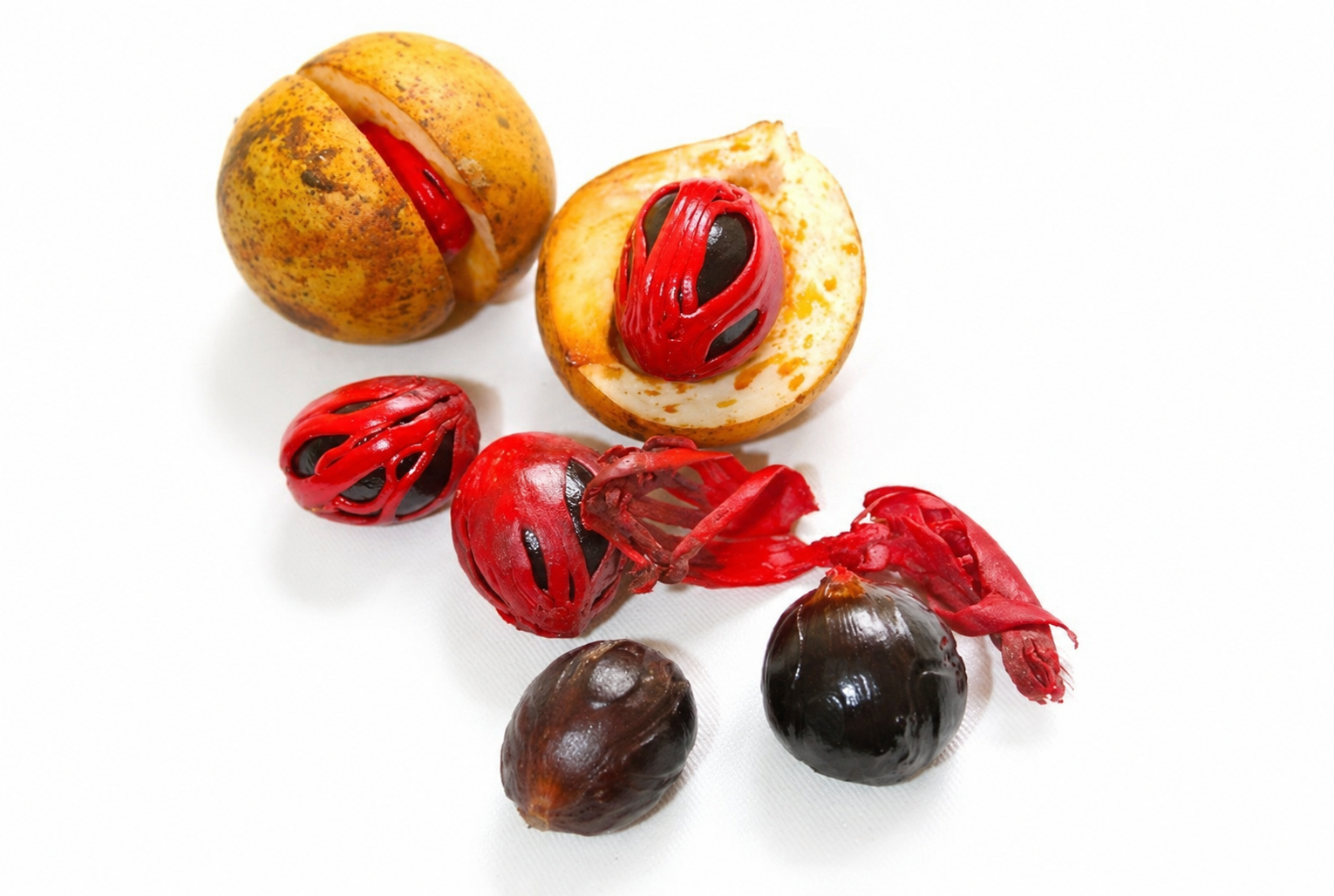
Nutmeg and mace are two distinct spices derived from the same tropical evergreen tree, Myristica fragrans, which belongs to the family Myristicaceae. This tree is unique in producing two different spices. Nutmeg is the kernel inside the seed, while mace is the reddish, lacy covering surrounding it. In terms of flavour, nutmeg has a warm, sweet, slightly nutty taste, whereas mace offers a more delicate, aromatic and slightly fruity flavour. Both spices are highly valued in food preparation and commercial applications. In addition to supplying these spices whole, Sri Lankan spice suppliers offer nutmeg and mace in powdered and essential oil forms to the global market.
The History of Nutmeg Cultivation and Trade
Since ancient times, nutmeg has been one of the world’s most prized spices. There is evidence suggesting that Roman priests may have burned nutmeg as a form of incense. It is also believed to have been a valuable and expensive spice in medieval European cooking, where it was used for flavouring, medicinal purposes and preservation. These applications contributed to its high demand in European markets.
Nutmeg originated in the Moluccas, particularly the Banda Islands in present-day Indonesia, historically known as the Spice Islands. Until the 19th century, nutmeg cultivation was largely concentrated in the Banda Islands. These islands also became an important destination in the spice trade, particularly for cloves, much like Sri Lanka.
As nutmeg and mace became highly prized commodities in international trade because of their distinctive aromas, culinary applications and scarcity in European markets, Portuguese and Dutch colonial powers competed for control of the trade. The Dutch established a particularly strict trading monopoly.
During the period of British colonial rule, nutmeg and mace cultivation gradually spread to other tropical regions, including Sri Lanka, Malaysia, Singapore and British Bencoolen, now part of Indonesia, where the crop thrived. However, there is also evidence suggesting that traders travelling along the Silk Road brought nutmeg to Sri Lanka before its official introduction.
Ceylon Nutmeg Cultivation and Export in Sri Lanka
Sri Lanka boasts a long-established spice industry, and Ceylon nutmeg and mace have formed part of its export portfolio since their introduction to the country by the British. The main nutmeg-growing districts include Kandy, Matale and Kegalle, located in the Central and Sabaragamuwa provinces, where the local climate and growing conditions support the crop.
As of 2026, nutmeg and mace cultivation in Sri Lanka covers approximately 2,788 to 2,936 hectares. Around 80% of the plantations are located in the Kandy District and are owned by small- and medium-scale farmers. Consequently, these farmers play a significant role in supporting the country’s nutmeg industry.
Farmers harvest ripe nutmeg fruits, separate the mace from the seed, and dry both products for commercial use. Sri Lankan exporters, producers and processors ensure that dried nutmeg and mace meet export-oriented moisture levels of 10% to 14%. The products are then exported to international markets in whole, ground and essential oil forms, according to buyers’ requirements.
Similar to Ceylon tea and other Sri Lankan spices, nutmeg cultivated under the geographical indication of Ceylon Nutmeg is associated with a distinctive chemical composition and flavour profile influenced by the country’s unique terroir. Sri Lanka has also maintained low aflatoxin levels in Ceylon nutmeg, a characteristic appreciated by global food safety regulators.
Sri Lanka meets approximately 5% of the world’s nutmeg requirements, with exports primarily destined for India, the United Arab Emirates, the United States, Germany and Pakistan. The country also exports mace, mainly to Germany, the United Kingdom and India, meeting approximately 7% of global demand.
Uses of Nutmeg and Mace
Nutmeg and mace are widely used in the culinary, food manufacturing, pharmaceutical, perfumery and personal care industries. In addition to their use as whole spices and powders, they are processed through steam distillation to produce essential oils for various commercial applications.
Culinary uses: Nutmeg is commonly used in curries, spice blends, soups, sauces, baked goods, desserts and beverages. Its warm flavour adds depth to a variety of dishes, while mace is valued for its delicate aroma and distinctive flavour, making it suitable for refined dishes and aromatic spice blends.
Curries, confectionery, baked goods and beverages such as eggnog, tea and coffee are among the main culinary applications of nutmeg and mace powders. Mace powder is used in both domestic kitchens and commercial food production to add a characteristic spicy-sweet flavour to dishes, confectionery, baked goods and desserts.
Food manufacturing: Both spices are used in ground form to flavour processed foods, confectionery, bakery products and beverage preparations. Nutmeg essential oil, produced through the steam distillation of ground nutmeg, is also used as a natural flavouring ingredient in baked goods, syrups, beverages and confectionery. Nutmeg oil is also reported to be one of the ingredients used in cola drinks.
Pharmaceutical, perfumery and personal care applications: The aromatic compounds found in nutmeg and mace make them valuable ingredients in essential oil production and selected fragrance, pharmaceutical and personal care applications. Nutmeg oil is also used in traditional Chinese and Ayurvedic medicine, aromatherapy, toothpaste and cough syrup.
Nutmeg butter, a semisolid yellow substance, is obtained by compressing the whole nut or through carbon dioxide extraction. It has various applications in the personal care and cosmetics industries. Today, nutmeg butter is used in the production of soaps, creams, lotions, lip balms, body butters, shampoos, hair pomades, rinse-out hair conditioners and bath bombs. Traditionally, it was also used to alleviate toothaches, joint discomfort and skin irritation.
Health Benefits of Nutmeg and Mace
The potential therapeutic benefits of mace powder are associated with its essential oils and nutrient content. Mace is traditionally attributed with antifungal, antidepressant, aphrodisiac, digestive and carminative properties.
It also contains minerals such as copper, potassium, calcium, manganese, iron, zinc and magnesium. In addition, mace contains B vitamins, vitamins C and A, and flavonoid antioxidants, including cryptoxanthin and beta-carotene.
However, many therapeutic claims relating to nutmeg and mace are based on traditional uses or preliminary research, and further scientific evidence is needed to establish specific health benefits in humans. Both spices should be consumed in normal culinary quantities, as excessive nutmeg consumption can cause toxic effects.
Discover Ceylon Nutmeg and Mace from Sri Lanka
As one of the world’s established spice-producing countries, Sri Lanka continues to supply international markets with high-quality nutmeg and mace in whole, powdered and essential oil forms.
At Uzesty Naturals (Pvt) Ltd, we are committed to carrying this legacy forward by supplying Ceylon nutmeg and mace to the global market.
If you are an international spice importer, food manufacturer or distributor looking for reliable bulk spice supplies, explore our bulk spices list and contact us for more information and export inquiries.